


On August 17, 2026, a dictation company called Whisper Flow announced a $280 million Series B funding round at a $2 billion valuation. The app turns messy speech into clean text inside your email, your docs, your chat windows. Its investors are not buying microphones. They are betting on the layer underneath, and the most famous name in that layer is the Whisper model — which anyone can download for nothing.
That is the odd shape of the Whisper model market in 2026. The technology is free, the money is enormous, and the people stuck in the middle keep asking the same question: if the Whisper model costs nothing, why does my invoice say otherwise?
This piece answers that, and it explains why a funding round in August moved a search term that had been flat all year.
The $280M Question Nobody Asks
Everyone reported the round. Fewer people asked what it means.
Here is the uncomfortable reading about the Whisper model: you can already transcribe audio for free. OpenAI publishes the Whisper model weights openly, and teams run them on their own GPUs at zero marginal cost per minute. So why does a company selling dictation — built on roughly the same underlying capability — command a $2 billion valuation?
Because the Whisper model is not the product. It has become infrastructure.
That distinction is the entire story of 2026 in this space. Once a capability is free and widely available, value migrates upward to whoever packages it best: the interface, the latency, the accuracy on your specific jargon, the integration with the app you already have open. Wispr Flow sells polish. OpenAI sells access. The free download sells nothing and still powers everybody.
When a $280 million round lands, it is not a signal that the Whisper model itself improved. It is a signal that the Whisper model became a commodity, and commodities are where the largest bets get placed.
Why a Funding Round Moves a Search Term
If you watch keyword graphs in this category, you will notice something that looks irrational: the Whisper model barely spikes when a new checkpoint ships, but it spikes hard when a company raises money.
The reason the Whisper model spikes on funding news is audience. A model release reaches developers who already follow the repository. A funding announcement reaches everyone else — the operator wondering if they are missing a category, the founder scanning for competitors, the marketer who needs to explain voice AI to a client. They search the technology name because it is the only name they recognise.
This is also why so much of the resulting coverage is confused. New readers arrive at the free download page, then at a pricing page quoting 0.006perminute,thenatanotherquoting0.006perminut**e,thenatanotherquotin**g0.017 per minute, and conclude that somebody is lying. Nobody is. They are looking at three different products wearing one name.
One Name, Three Products
Untangle this before you compare a single price.
The open-source Whisper model. This is the Whisper model as weights you download and run yourself. Free forever, data stays inside your building, and you inherit the GPU bill and the maintenance. This is what most people mean, and it is the layer the funding round is built on top of.
The Whisper API. The hosted endpoint sold as whisper-1, priced at $0.006 per minute. Upload audio, receive text, pay by duration. Almost no setup, very little control.
GPT-Realtime-Whisper. A separate streaming model for live transcription, priced at 0.017perminute—about0.017perminut**e—abou**t1.02 per audio hour. Words appear while the speaker is still talking.
Same lineage, three products, three economics. Every misleading comparison in this space comes from mixing the free weights with the paid endpoints.
What Actually Changed in 2026 (Spoiler: Not the Weights)
If the funding round made you assume a new model landed, it did not.
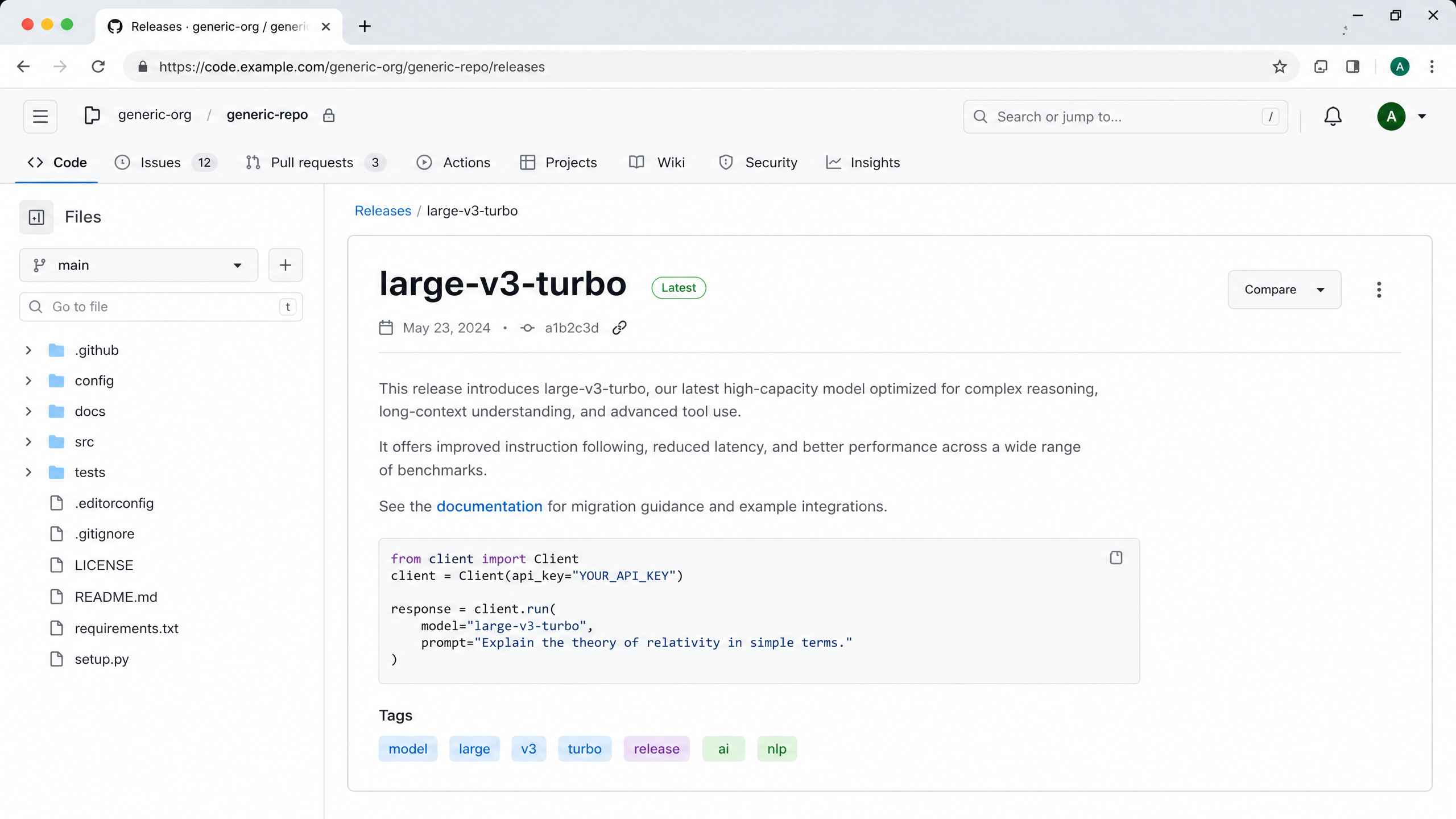
The newest open Whisper model release is still turbo from late 2024, roughly 798 million parameters, built on large-v3 with a shallower decoder so it runs faster and gives up a little accuracy. Before it, large-v3 arrived in November 2023 at about 1.55 billion parameters. There is nothing new to download this year.
What changed in the Whisper model ecosystem is the menu. A real-time endpoint appeared with explicit per-minute pricing. Capital arrived at the application layer. And the cost gap between batch and streaming became a number ordinary teams could finally see — which is exactly where budgets start bleeding.
Where the Real Cost Sits
Now the part that pays for itself: two hosted options, side by side.
Batch costs 0.006perminute,or0.006perminut**e,or0.36 per hour. Streaming costs 0.017perminute,orabout0.017perminut**e,orabout1.02 per hour. Streaming is roughly 2.8 times the price.
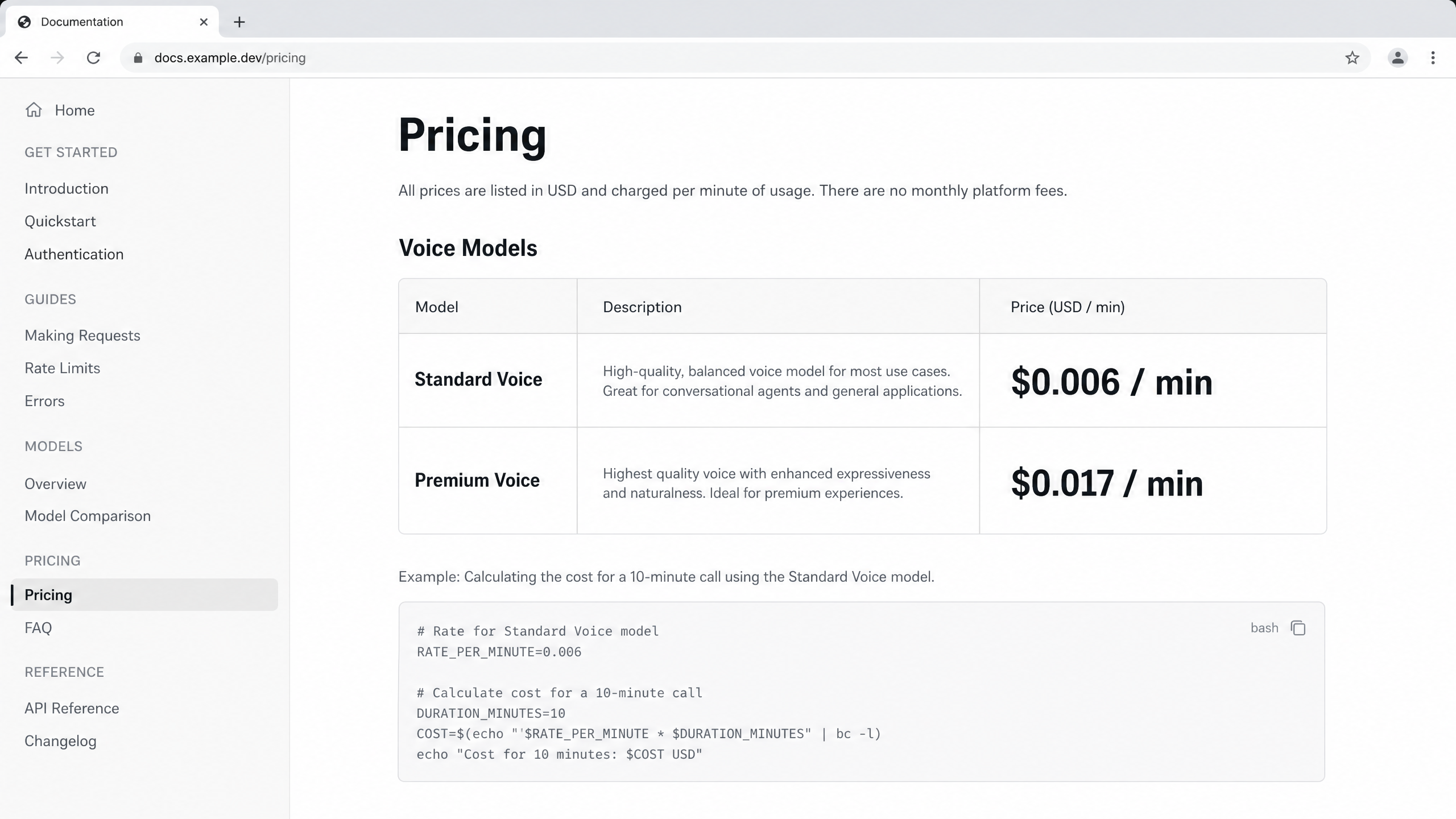
The premium does not buy accuracy. Streaming is usually less accurate than batch transcription because it commits to words before hearing the full sentence. What you're paying for is latency: the Whisper model delivers a transcript in real time instead of waiting until the entire file is processed.
That's a worthwhile trade-off when someone is actively watching. Think live captions during a meeting, dictation where you watch your words appear, or a voice agent that needs to respond mid-conversation. But when no one is watching, you're paying 2.8 times the rate for a benefit you don't actually use.
Run the numbers, and the difference becomes clear. Transcribing 10 hours of recorded lectures through the batch Whisper model costs about $3.60. The same 10 hours through streaming costs about $10.20. Nobody needs to watch a lecture recording transcribe itself in real time. That's an extra $6.60 spent for no practical benefit.
The Capital Is Reading the Same Table
Return to the funding round with this pricing in hand, and the strategic logic becomes obvious.
If transcription costs a dollar an hour, then transcription is not where you build a moat. You cannot charge a premium for a commodity, and you cannot defend a price that OpenAI can set at $0.017 whenever it likes. So capital flows to the wrapper: the product that turns a cheap capability into something a person would actually pay for monthly.
Two implications follow, and they point in opposite directions.
If you are a buyer, this is good news. The commodity layer keeps getting cheaper, and the wrapper keeps getting better. You should rent the Whisper model as a commodity and demand a better product.
If you are a builder, the lesson is harsher. Competing on transcription quality is competing on a feature that is already free. Compete on the workflow the transcript unlocks, because that is the only part with a defensible margin.
Guides: Choosing Your Setup in Seven Moves
Enough economics. Here is the sequence that avoids expensive mistakes.
Step 1: Answer three questions before opening any tool
Does the audio already exist, or are you capturing it live? Is your volume a few hours a week or thousands a month? Must the audio stay inside your own infrastructure?
The answers eliminate most options immediately. Existing files plus modest volume mean the hosted batch Whisper model endpoint. Existing files plus heavy, sustained volume mean self-hosting. Live audio calls for streaming. Regulated audio means self-hosting, regardless of what the spreadsheet says.
Step 2: Pick the Whisper model by task, not by reputation
Accuracy first, use large-v3, the highest-accuracy Whisper model. Tight GPU or long queue, use turbo. Both are credible. The mistake is choosing whichever one a blog post called best and never testing it on your own recordings.
Step 3: Fix the audio before blaming the model
Most disappointing transcripts are input problems, not model failures. Downsample to 16 kHz mono. Strip long silences when chunking. Skip aggressive noise reduction, because the artefacts cost more than the noise. Keep speakers on separate channels where possible.
Step 4: Match the tool to where the audio already lives
Not every job deserves a pipeline, and this step saves the most money.
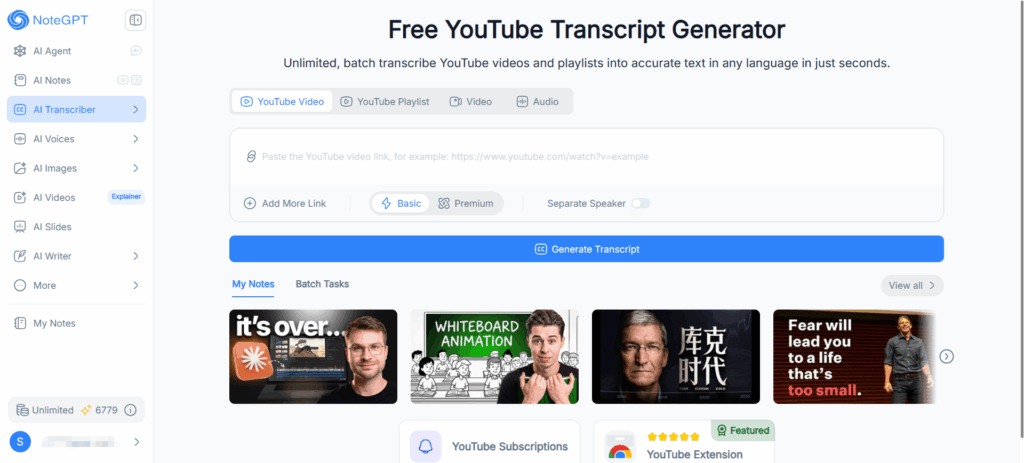
If the audio is already on YouTube, skip model selection entirely and pull the text with a YouTube Transcript Generator. You get transcripts with timestamps you can search and cite, with no per-minute meter running.
If the material is on BiliBili, a BiliBili Summarizer takes the link and returns a summary, which is often enough when your real goal is deciding whether a video deserves a full transcript at all.
And if you simply have an audio file, an audio to text converter produces editable text without any setup decision. Three routes, zero pricing tables to decode, and all three are worth checking before you provision hardware or sign up for API credits.
Step 5: Build the Whisper model glossary once
Product names, acronyms, and surnames are where transcription often fails in public. Self-hosted Whisper model setups can bias decoding toward a custom word list. With a hosted endpoint, run a find-and-replace pass against a glossary instead. Build it once and reuse it across every transcription.
Step 6: Measure Whisper model accuracy against a gold set
Hand-correct five to ten minutes of your own audio and keep it as a reference dataset. Re-run it whenever you change Whisper models or settings. Without a gold set, every discussion about transcription quality is just an opinion.
Step 7: Archive the corrected version, not the live one
If you use streaming transcription, re-run the finished recording through batch processing afterward. Streaming output can revise itself as more context becomes available. Your final archive should contain the corrected transcript, not the provisional live output.
The Table Worth Bookmarking
| Setup | What it costs | Use it when | What hurts |
|---|---|---|---|
Self-hosted large-v3 | Hardware plus your time | High volume, sensitive audio, accuracy matters | GPU capacity, maintenance |
Self-hosted turbo | Hardware plus your time | Speed on modest hardware | Small accuracy loss on some languages |
Whisper API (whisper-1) | $0.006 per minute | Modest or bursty volume | Little room to customise |
| GPT-Realtime-Whisper | $0.017 per minute | A human is waiting for words | 2.8x cost, output may change |
Remember the last two rows. The gap between them is the most common waste in the category.
Four Ways Teams Burn Money Here
Paying streaming rates for batch work. If nothing live is happening, use batch. This leak is invisible on an invoice, which is why it survives.
Trusting one language's error rate. The official model card says performance is strongest on roughly ten languages and varies widely elsewhere. Chinese, Japanese, Thai, Lao, Burmese and some Korean evaluations are scored by character error rate rather than word error rate, so cross-language WER tables comparing them are quietly wrong.
Reading "99 languages" as "99 languages done well." It is a capability claim. Budget review time for anything outside the strong set.
Skipping the glossary. Names will be wrong on pass one, every time, and you pay that correction cost once per file forever.
What the Round Actually Tells You
Strip away the press release and one sentence remains: the Whisper model is now cheap enough to treat as plumbing, and the money is going to whoever builds the room around the plumbing.
For most teams, that is liberating. You do not need to own a model to deliver a good experience. Rent the layer, pick the cheapest option that meets your latency need, and put your effort into the part customers notice.
For anyone building in this space, the bar just moved. Competing on transcription accuracy is competing on something free. The defensible work is what happens after the words appear.
The Short Version
Free to download, cheap to rent, expensive to stream. A $280 million round that rewarded packaging, not model quality. A keyword spike caused by capital, not by a release. That is the Whisper model in 2026 — an infrastructure layer wearing a consumer product's reputation.
Pick the cheapest layer that meets your latency requirement, and stop buying speed nobody watches. If you want to see the free end of this market in action, start with the transcript routes above; they cost nothing to try and require no decision about GPUs.
Frequently Asked Questions
Did the $280M round mean a new Whisper model was released?
No. Wispr Flow's round funds a dictation product built on speech recognition, not a new open model. The newest open release is still turbo from late 2024, with large-v3 from November 2023 before it.
Why is the Whisper model free if companies raise hundreds of millions on it?
The weights are openly published, so the capability itself is free. The funding goes to products that package that capability — interface, latency, accuracy on specific vocabularies, and integration into existing apps. Free technology, paid experience.
What exactly was Wispr Flow's funding?
A 280millionSeriesBata280millionSeriesBat**a2 billion valuation, announced August 17, 2026, led by Menlo Ventures, with Notable Capital returning and PLUS Capital joining. Total funding after the round was reported at roughly $361 million.
What is the difference between Whisper API and GPT-Realtime-Whisper?
The Whisper API transcribes completed files at 0.006perminute.GPT−Realtime−Whisperstreamsliveaudioat0.006perminut**e.GP**T−Realtime−Whisperstreamsliveaudioa**t0.017 per minute. The second costs about 2.8 times more and buys latency, not accuracy.
Is streaming less accurate than batch transcription?
Usually yes. Batch hears the whole file before committing, so it can correct itself. Streaming must emit text under a deadline, which is why its output may be revised later.
Is there a new Whisper model to download in 2026?
There are no new open-source Whisper model weights released in 2026. The available options remain large-v3 for accuracy and turbo for faster transcription. If you're not familiar with model deployment or technical setup, you can try a SaaS tool like NoteGPT to experience AI transcription directly without installing or configuring models. It's a more convenient way to test speech-to-text capabilities before choosing a solution.
Does the Whisper model handle Chinese and Japanese well?
It supports them, but read the benchmarks carefully. These languages are measured with character error rates rather than word error rates, and quality varies widely across languages. Plan a review pass and a glossary.
How do I cut transcription costs fast?
Move every non-live job to the batch endpoint, which costs less than a third of streaming. Build a reusable glossary so corrections are one-time. If the source is YouTube or BiliBili, use the direct transcript route and skip the pipeline entirely.