


In a world flooded with images, distinguishing real from fake has become a daily challenge. AI-generated images are everywhere, from social media posts and marketing campaigns to news articles and memes. They look realistic, convincing, and sometimes even flawless. But not all that glitters is gold, and not every image is real. This is where an AI generated image detector comes into play, offering a practical solution for anyone who wants to identify fake pictures and detect AI-generated images with confidence.
If you’ve ever hesitated before sharing a photo online because it seemed too perfect, or questioned whether an image was manipulated, you already understand the importance of AI image detection. AI generated image detectors analyze visual cues and patterns left behind by AI models, helping users spot fake images quickly. With tools like NoteGPT’s AI Image Detector, even non-experts can check images for authenticity, making the internet just a little less deceptive.
Why AI Generated Image Detectors Are Essential
AI-generated images are no longer just fun experiments; they are a major part of online content. Generative AI technologies such as DALL·E, MidJourney, and Stable Diffusion have made it possible for anyone to create highly realistic images in minutes. While these tools have enormous creative potential, they also pose risks. Misleading visuals can spread misinformation, manipulate opinions, or trick audiences into believing something that isn’t real.
Risks of AI-Generated Content
AI-generated content can be more persuasive than you think. A well-crafted AI image can make a fake event look real, a counterfeit product seem authentic, or even trick entire social media communities into believing a story that never happened. Unlike traditional photo manipulation, AI-generated images often evade casual human scrutiny because they are generated rather than manually edited, leaving no obvious traces. Without tools like AI generated image detectors, it’s easy to be fooled.
Benefits of Using AI Generated Image Detectors
Using an AI generated image detector transforms the way you interact with online visuals. These tools give you the power to verify authenticity in seconds, reducing the risk of spreading misinformation or using misleading images. Content creators can confidently include images in blogs or social posts without accidentally promoting AI-generated fakes. Journalists can fact-check crucial visuals before publication, and marketers can protect brand credibility. Essentially, an AI generated image detector acts like your digital magnifying glass, exposing subtle AI fingerprints that the naked eye might miss.

How AI Generated Image Detectors Work
Understanding the mechanics behind AI generated image detectors is easier than you might think. At their core, these tools use a mix of machine learning models and pattern recognition algorithms to identify AI-generated images.
Detecting Subtle AI Patterns
AI generated image detectors excel at spotting patterns humans usually overlook. For example, AI struggles with consistent lighting in complex scenes, realistic hand shapes, or text in images. Detectors analyze pixel-level irregularities, inconsistencies in shadows, or unnatural textures in hair, skin, or objects. Even when an image looks perfect at first glance, these tools highlight tiny anomalies, like slightly off-proportioned eyes or repeated background patterns, which are telltale signs of AI generation. The best detectors, like NoteGPT’s AI Image Detector, turn these microscopic details into clear insights you can act on.
Visual Reports and Heatmaps
One of the most helpful features of advanced AI generated image detectors is visual reporting. Instead of just giving a yes/no verdict, many tools generate heatmaps or overlays highlighting suspicious areas. Imagine seeing a photo with certain parts glowing in red, signaling where AI patterns likely appear. This feature makes detection not only more transparent but also educational. Over time, you start recognizing these AI artifacts on your own, without relying solely on the tool. Visual heatmaps are particularly useful for complex images containing multiple elements, helping you pinpoint exactly where AI-generated manipulation may exist.

Key Features of AI Generated Image Detectors
When selecting an AI generated image detector, certain features can make the difference between an average tool and a reliable one.
Speed and Accuracy
The best AI image detectors strike a balance between speed and accuracy. Quick detection is essential if you’re analyzing multiple images for content creation or research, but speed should never compromise reliability. Advanced detectors can analyze high-resolution images in seconds while providing precise probability scores or detailed heatmaps, so you know exactly how confident the tool is in its assessment.
Multi-Format Support
Not all images come in the same format. Some may be JPEGs downloaded from social media, others PNGs from design software, or WebP images embedded in websites. A strong AI generated image detector handles a variety of formats seamlessly. You shouldn’t need to waste time converting images just to get a detection result. Multi-format support ensures your workflow stays smooth and efficient.
Ease of Use
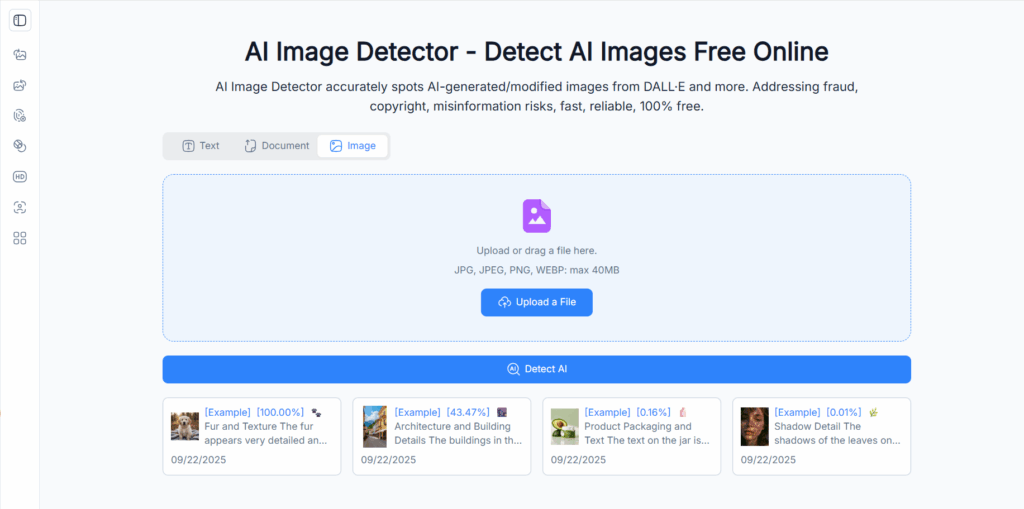
The most effective AI generated image detectors are designed for humans, not data scientists. Drag-and-drop uploads, clean interfaces, and clear visual cues allow anyone to start detecting AI-generated images immediately. You don’t need advanced technical knowledge to interpret results—probability scores, color-coded highlights, and simple dashboards make the detection process intuitive and approachable.
Advanced Analytics
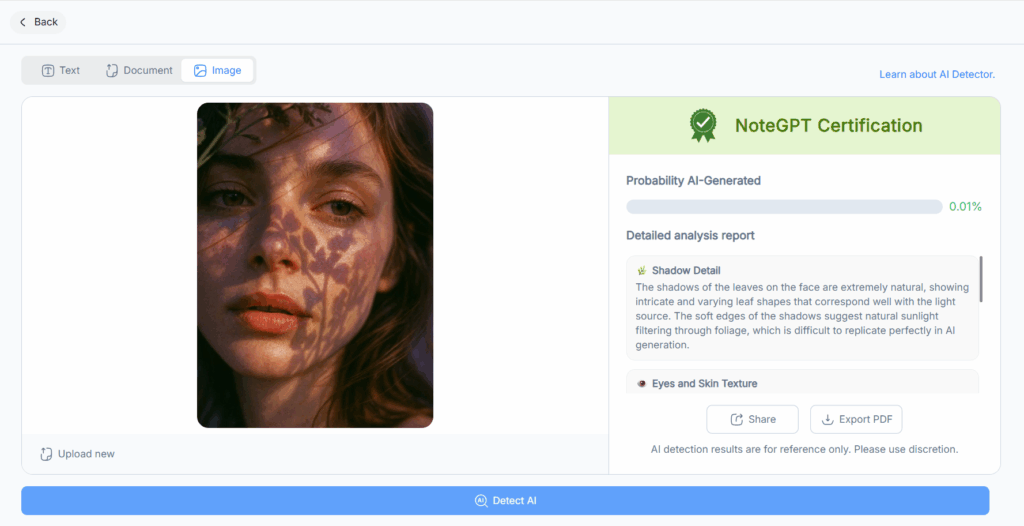
Some AI generated image detectors offer deeper insights beyond basic detection. They can provide detailed reports, including percentage likelihood of AI generation, highlighted areas, and explanations of why a section was flagged. This is especially valuable for professional users, researchers, or content creators who want to understand not just whether an image is AI-generated, but also why the tool reached that conclusion. Advanced analytics elevate AI detection from a simple yes/no tool to a learning experience, teaching users to spot subtle AI signatures themselves.
How to Spot Fake Pictures Using an AI Generated Image Detector
Using an AI generated image detector effectively isn’t just about uploading an image and clicking a button. The more you understand the process, the more accurate and reliable your results will be. Here’s a detailed guide to make the most out of these tools.
Step 1: Upload Your Image Correctly
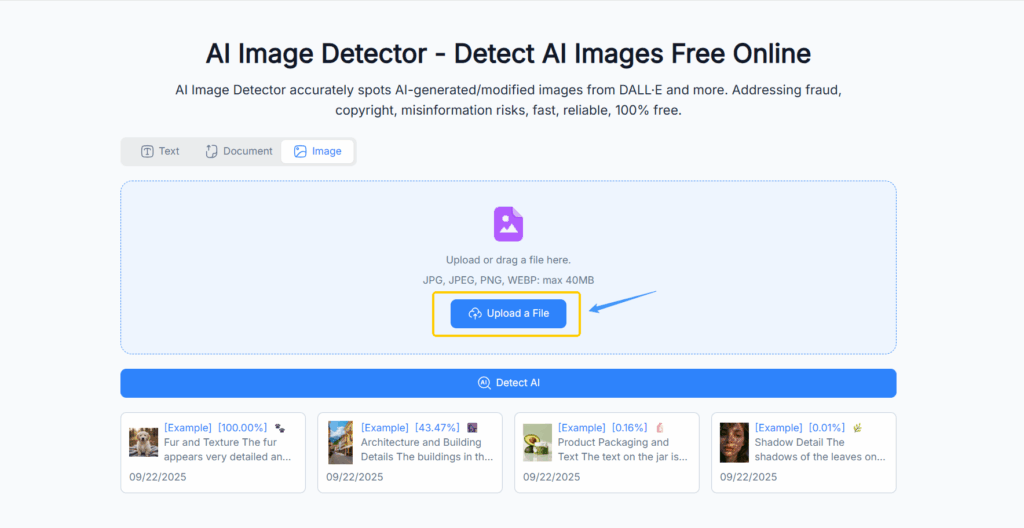
Start with the highest quality image you have. AI detectors work best when they can analyze fine details, so blurry or heavily compressed images may produce inaccurate results. Drag-and-drop features or URL uploads make it convenient to feed your images into the AI generated image detector. For professionals handling multiple visuals, batch upload support is a game-changer.
Step 2: Let the Detector Analyze AI Patterns
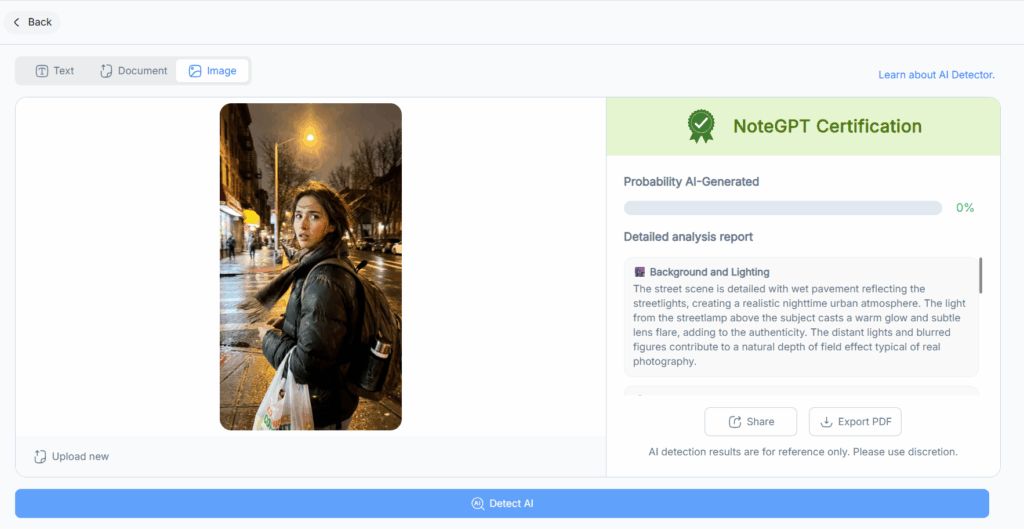
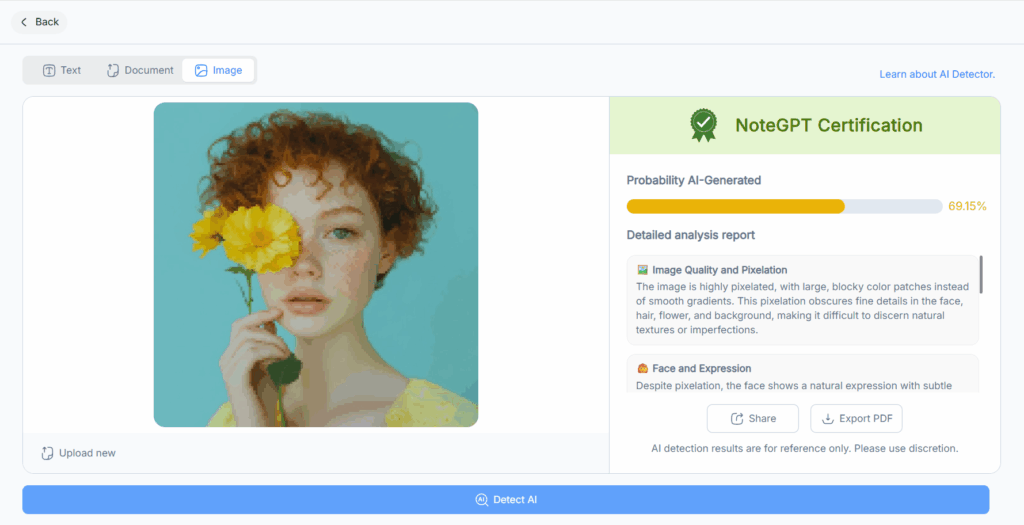
Once uploaded, the AI generated image detector scans the image for subtle signs of AI generation. These signs can include unnatural textures, slightly distorted facial features, repetitive background patterns, or inconsistent lighting. Advanced tools even consider image metadata and noise patterns, giving a more complete assessment. The probability score you receive isn’t just a number—it reflects the detector’s confidence that certain areas were AI-generated.
Step 3: Interpret the Visual Reports
Visual reports, such as heatmaps, overlays, or highlighted areas, allow you to see exactly where the AI generated image detector has flagged potential AI manipulation. A red glow on a background pattern, or a highlight over a strangely shaped hand, tells you what to scrutinize. These reports also help you learn to recognize AI signatures without relying entirely on software. Over time, using an AI generated image detector trains your eye to spot fake pictures on your own.
Step 4: Make Informed Decisions
After analyzing the results, decide on your next step. If you’re a content creator, maybe you avoid using that image in a blog or campaign. If you’re a journalist, further fact-checking is warranted. For casual users, this may simply mean skipping the share button. Either way, the AI generated image detector has empowered you to act with confidence instead of guessing.
Tips for Accurate AI Image Detection
Even the best AI generated image detector tools have limitations, and knowing some practical tips can improve your results significantly.
Use Multiple Tools for Verification
Relying on a single AI generated image detector can sometimes be misleading, especially with high-quality AI images. Cross-checking results with another detector increases confidence and accuracy.
Pay Attention to Subtle Artifacts
AI models often leave traces invisible to the naked eye. Look for repetitive textures, odd shadows, inconsistent reflections, or unnatural edges. Even if the detector gives a moderate probability score, these artifacts are clues worth considering.
Stay Updated with AI Trends
Generative AI evolves rapidly. New models may produce images that evade older detection techniques. Using an up-to-date AI generated image detector ensures you’re catching the latest AI tricks.
Practice Makes Perfect
The more you use AI generated image detectors, the better you’ll become at spotting fake pictures, even without software assistance. It’s like training your brain’s “AI-spotting muscles”—a combination of technology and human intuition.
Practical Applications Across Industries
AI generated image detectors aren’t just for curious internet users—they’re indispensable tools across various industries.
Content Creation and Marketing
For bloggers, designers, and social media managers, detecting AI-generated images ensures content authenticity. Imagine accidentally using a hyper-realistic AI-generated photo in a campaign claiming “real-life scenes.” A detector prevents embarrassment and maintains credibility.
Journalism and Media Verification
Fake images can spread misinformation faster than any headline. Journalists benefit from AI generated image detectors by validating images before publication. Visual integrity is critical in building audience trust, and detectors serve as a first line of defense against manipulated visuals.
Brand and Legal Protection
Brands can use AI generated image detectors to uncover counterfeit product images, fraudulent advertisements, or misleading social media posts. Detecting AI-generated images proactively prevents damage to brand reputation and avoids potential legal complications.
Education and Research
Researchers studying AI, computer vision, or digital media rely on AI generated image detectors to understand trends, evaluate model outputs, and teach students about digital authenticity. The tool becomes both a practical utility and an educational resource.
Everyday Users
Even casual users benefit. Checking images before sharing reduces the chance of spreading misinformation, falling for scams, or being misled by deceptive AI-generated visuals. An AI generated image detector equips anyone with the ability to “think twice before you click.”
Common Mistakes When Using AI Generated Image Detectors
Even experienced users make errors when using AI generated image detectors. Avoiding these pitfalls ensures accurate results.
Ignoring Image Quality
Low-resolution, blurred, or compressed images reduce the detector’s effectiveness. Always use the best available image for scanning.
Over-Reliance on One Tool
Not all AI generated image detectors are created equal. Combining tools or validating findings increases confidence in your analysis.
Misinterpreting Results
Probability scores are guidelines, not absolutes. A moderate score doesn’t always mean the image is fake, and a low score doesn’t guarantee authenticity. Understanding what the tool reports is just as important as using it.
The Future of AI Generated Image Detection
The landscape of AI-generated images and detection tools is evolving rapidly. As generative AI models become more sophisticated, AI generated image detectors are also improving. Expect the following trends in 2026 and beyond:
Real-Time AI Detection
Future detectors will analyze images in real-time, making live content verification possible during streams, social media posting, or online meetings. Imagine instantly knowing if a photo or video is AI-generated before it goes public.
Integration with Social Media Platforms
AI generated image detectors may become embedded in social media, alerting users when images are likely AI-generated. This would help combat misinformation at the source.
Educational and Consumer-Facing Tools
As AI detection becomes more mainstream, consumer-friendly AI generated image detectors will teach users to recognize fake pictures independently, creating a more informed online community.
Enhanced Accuracy
Combining multiple detection methods—pixel-level analysis, metadata verification, and AI pattern recognition—will continue improving accuracy. The tools will become more reliable even as AI images become more realistic.

Expert Recommendations
For anyone serious about detecting AI-generated images, consider the following advice:
Regularly Use Detection Tools – Make AI generated image detectors part of your workflow. Frequent use sharpens your intuition and ensures consistent results. Combine Tools for Accuracy – Use multiple detectors to cross-check images, particularly when analyzing high-stakes visuals. Educate Yourself on AI Artifacts – Learning what to look for (repetitive patterns, unnatural lighting, irregular shapes) enhances your ability to identify fake pictures. Stay Informed – Follow AI research and generative model trends to understand new methods for creating realistic images and how detectors adapt.
With the right approach, AI generated image detectors empower users to navigate a digital world where seeing isn’t always believing.
Conclusion
AI-generated images are no longer just a novelty—they’re everywhere, sophisticated, and sometimes deceptive. An AI Image Detector is an essential tool for anyone interacting with online visuals. By using AI image detectors, understanding AI artifacts, and applying best practices, users can spot fake pictures, maintain authenticity, and protect themselves from misinformation.
Whether you’re a content creator, journalist, marketer, educator, or casual social media user, integrating an AI Image Detector into your workflow ensures you’re making informed decisions about the images you consume and share. With continued advancements in detection technology, staying ahead of AI-generated visuals has never been easier—or more necessary.